

Subtle, Suspended Clouds
五月

Pain. Suffering. Do life’s hardest trials accelerate our spiritual development and “awakening”?
What does it mean to live with life-altering medical diagnoses, to walk the path we never intended to take?
Since I turned 40, life has never been the same. Ever since I was thrown a diabetes diagnosis, unwanted surprises that followed have continued to multiply.
This May, in the world of the Japanese tea ceremony, there is a term associated with Children’s Day, when colorful carp-shaped koinobori banners are flown. It is called noborigoi 登鯉, the climbing carp.
It draws from the ancient Chinese legend of the Dragon Gate (登龍門), in which a carp swims upstream against the fierce currents of a waterfall, ultimately transforming into a dragon. The five-colored koinobori also evoke the symbolism of Yin-Yang and the Five Elements (陰陽五行), an ancient cosmological system that originated in China and later influenced Japanese thought and culture.
This month, the storms are nothing like I’ve ever seen before.
In my own upstream struggle, it’s not quite the beautiful transformation from battle-worn carp into victorious dragon, only a season of “when it rains, it pours”. In Japanese, similar sentiments are expressed to describe misfortune piled upon misfortune.
踏んだり蹴ったり (fundari kettari), literally, “stepped on and kicked on”. An expression used in general conversation.
泣きっ面に蜂 (naki tsura ni hachi), literally, “a bee on a crying face”. A more poetic expression.
The storms I face are not the relentless waves and the constant surge of choppy waters. They are also the hauntingly suspended moments — the calm before the storm — where everything goes still, almost too still.
Like clouds trembling, clinging to the vast sky, on the verge of breaking apart.
Storms, I learned, are not only found in chaos, but also in the painful pause of waiting — silent, invisible, yet utterly heartbreaking.
This week, after weeks of medical scans and waiting, I will have a bit more clarity about the extent of my condition. Whatever the “final” results may reveal, there will be surrender to life. One of acceptance.
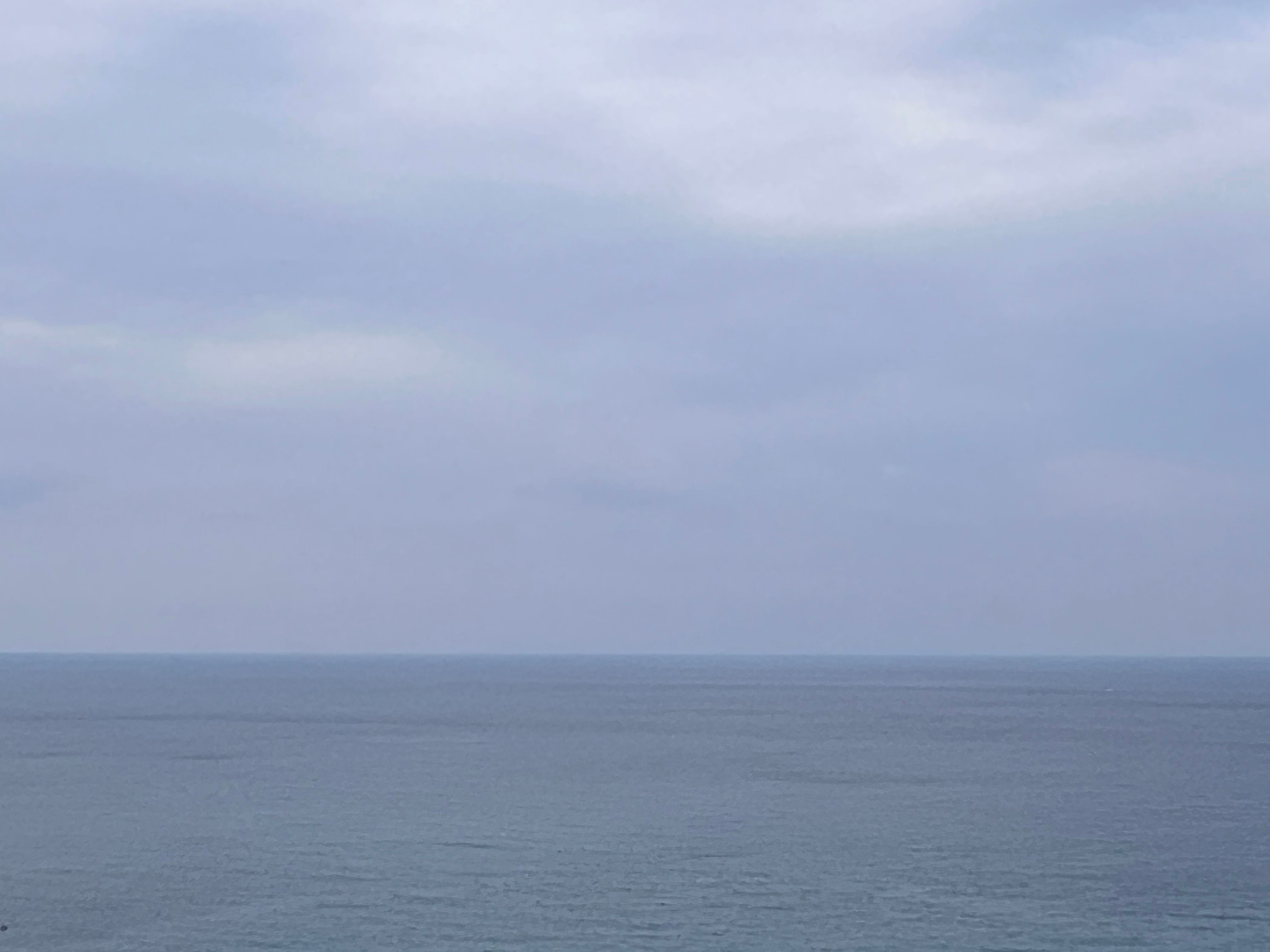
Light, suspended in shadows
Suleika Jaouad, a three-time cancer survivor, wrote in her memoir Between Two Kingdoms about survival and the difficult work of rebuilding a life interrupted by illness.
And she is right. Living with life-altering conditions often means learning to live in two worlds at once.
There is the ordinary world, where everything continues to go on. A world that continues to seek, to strive, to be loud and to compete, to secure the most fundamental needs of a mortal being — money, food, responsibilities, putting oneself up for show, and the endless rhythms of daily routines. The visible world.
And then there is the other world that doesn’t pack as neatly. You can’t quite put your finger on it nor articulate with clarity in words. It’s raw and a lot darker, yet within such darkness, depth emerges — that invisible strength you never knew existed until life demands it from you. It bares open the facade and tells you nothing but the truth. I call it the invisible world.
Going to clinics and the hospital is fast becoming a regular part of my life.
Over time, I came to see patients of all ages and from all walks of life navigating the invisible world. Lying down on hospital beds, the patient confirming his or her name to the medical staff, all the while life is stripped down to its bare essentials. A world where time ticks away slowly, alongside the hums of the machines, beneath those irritable brown-yellow hospital lights.
White curtains drift through the air, trying to shield one patient from another, yet offering no definite protection from one’s pain whatsoever — no promises of making it through another day.
It’s a world where you learn, intimately, to live with uncertainty and the exhaustion of unpredictability. And just when you thought you have adapted to the new reality, another sudden wave arrives. It’s a life lived no longer at the center, but along the sharp edges of the illusion of an “ordinary” life.
In this kind of world, one learns the weight of being a human in the fragility of ordinary moments. It’s a world suspended between opposing extremes — one of grieving and acceptance, and within limitation, unexpected spaciousness opens up.
The strength to survive is not always loud nor heroic, but quiet and enduring, like determined new shoots piercing through heavy piles of winter snow, trying to stay alive alongside the hostility of the unknown.
Perhaps it is in these shadows that one might also find light.
The invisible world promises nothing — certainly not the removal of suffering — but it changes the way one inhabits life in it.
怒*而飛,其翼若垂天之雲。When he rouses himself and soars into the air, his wings are like clouds draped across the heavens.
— Zhuangzi, Inner Chapter 1, translated by Brook Ziporyn
*I’ve come to realize that 怒 here does not simply mean anger in the ordinary sense of reacting to external conditions, but something closer to awakening, the drawing forth of one’s inner capability and will.
📒 Read Xiaoyao | Becoming Yourself
Subtle, not the loudest
Living with life-altering health diagnoses is not only a physical, medical experience. It is also very much an emotional, philosophical, and spiritual journey for me.
Gradually, living with illness is changing my relationship with how I now see the textures of life.
Suffering is messy. It is confronting and humbling — dismantling illusions and stripping away excess, drifting us away from our former selves, so accustomed to moving through life unconsciously.
In suffering, one learns to sit peacefully in solitude, to regain strength in isolation, and to see life in a new light — a piercing clarity, no longer scattered, but distilled into greater focus. It draws us closer to what matters most, and to those we hold most dear.
Small moments become precious. Surrendering to rest becomes more meaningful. A handful of deep relationships — the very few people who truly matter — become essential anchors as I move through uncertain waters.
In the interruption to certainty, I have started to become drawn to the subtle, not the loudest. To the seemingly aimless and empty, whose essence becomes more apparent the longer I stay with it.
I have gone much more inward, with less desire to be in the loud company of others, preferring instead to spend quiet, solitary moments. Not pitiful, but contemplative — a turning toward the vast inner landscape rather than away from the world.
In his later years before passing from cancer, pianist Ryuichi Sakamoto was known to play his pieces (including his famous Merry Christmas, Mr. Lawrence) much more slower, with fragile tenderness, so as to better listen to the resonance between each note, each one carrying the weight of time.
Amidst the gravity of everything else, I find comfort in the small, subtle everyday in-between moments in Kyoto. Increasingly intrigued by changes, transitions, and the fleeting moments suspended in time and over time.
Morning walks across the bridge, looking out over the Japanese teahouse resting beside a pond where the shrine also stands. Each day is shaped by changing light and shifting water, with occasional sightings of blue herons, turtles, and koi gliding beneath the surface, now and then breaking the calm surface in sudden leaps.
Deeply listening to Bach’s Chaconne from Partita No. 2 in D minor, a meditative musical piece of remarkable depth and emotion that a dear friend shared with me. I’ve been returning to it again and again as I prepare dinner, listening through different instrumental interpretations. Each time, with newfound appreciation.
Slowly tasting Taiwanese high mountain oolong tea, Dayuling (大禹嶺), a gift from another friend. I brew it again and again, finding its subtlety enduring. Each cup is brewed the same way, yet reveals a different dimension from day to day, much like a familiar piece of music heard with fresh ears.
I continue to get back to the basics, remembering what my tea teachers taught me: gently pouring away waste water from the chawan tea bowl, as if returning it, as an essential part of tea preparation. Brewing the same tea with the same parameters, again and again, to taste the subtleties of Taiwanese high mountain oolong and the gentleness in Chinese white and green teas.
This time, I’m moving through life even more slowly, dedicating time to the important few everyday things, in the simple act of returning again and again to what is essential.
And I find myself, in this tender season of life, sitting honestly with the question that does not ask to be answered quickly: “Who am I, really, when all of this is taken away?”
Related posts
To learn more about 72 Seasons of Tea, click here
Over 100 essays and conversations on the spiritual way of tea through Zen, Taoism, and Japanese learning • Where beauty lives in the ordinary, imperfection reveals spaciousness • Lived in 14 cities, 7 countries • Malaysian mother of two, Kyoto-based.
If you enjoy my writings, please consider a paid subscription.