


If you enjoy my writings, please consider a paid subscription or donating a cup of tea.
I miss writing. Now taking a mini break before my back-to-back (-to back) Japanese exams starting tomorrow, for the rest of this week.
I guess really do like to write. Sitting with diabetes and even with this slight ache in my right arm and my cold fingers — a common tendency during the cold, wintry weather — I write. My Japanese homework and the prep for dinner before class can wait.
No matter if you’re sick, enduring heartache, or holding on to pain and sadness — ironically, all of them can be life’s most beautiful gifts. A shared common human experience.
Pain pushes you to cross a certain threshold, one that you would have never notice otherwise. For me, it asks of me to cut through the noise to lean into simplicity. To forego the good to focus only on the very best, on what I can control — and on what truly matters.
Winter Blossoms
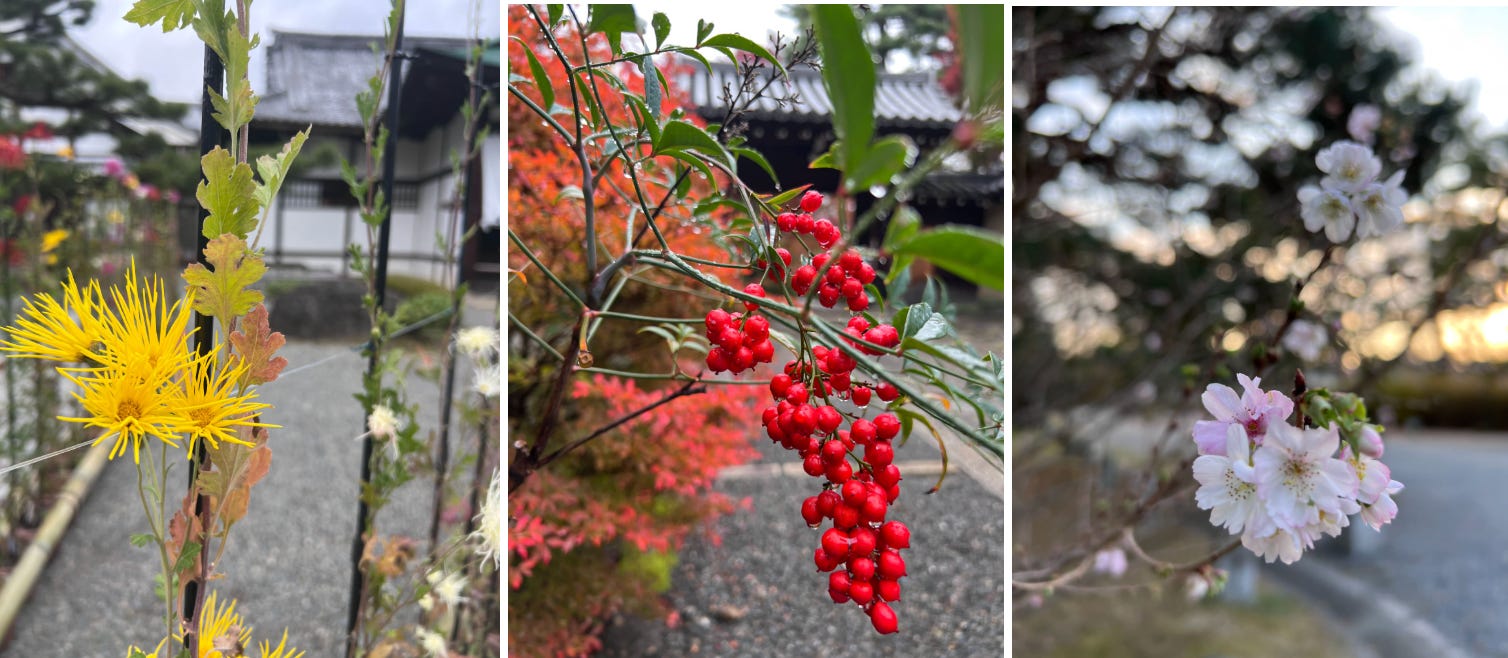
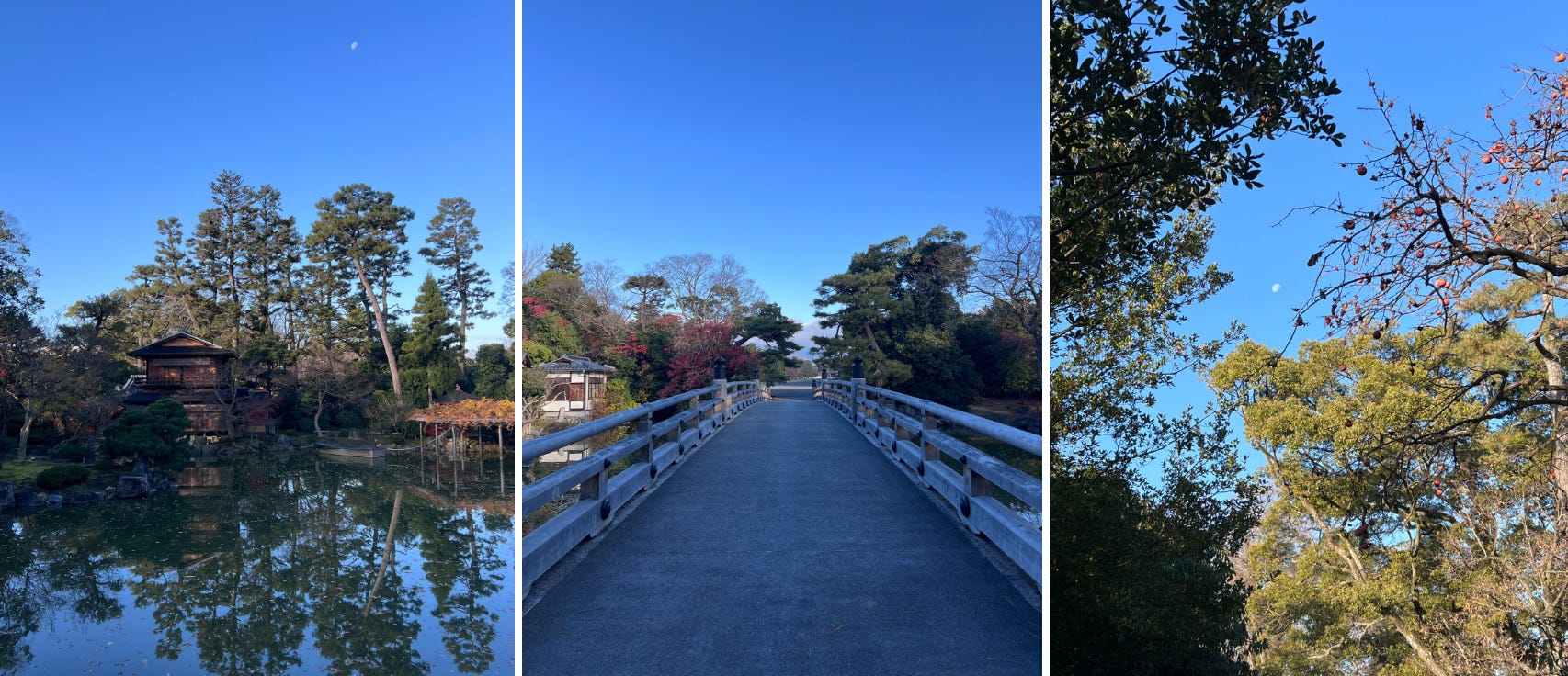
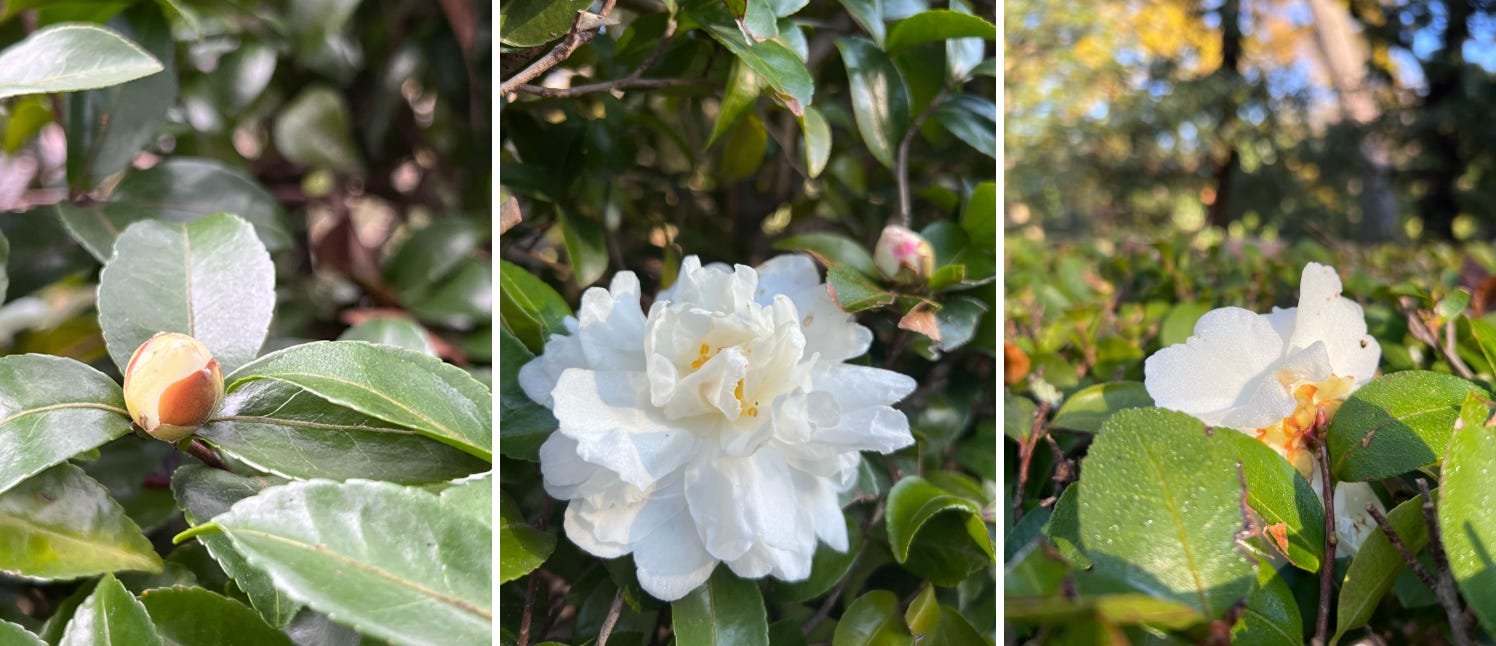
Winter is a very beautiful season in Kyoto. From winter chrysanthemums (寒菊), the bright red nanten (南天), to the early blooms of the plum blossoms (梅) and camellia sasanqua (山茶花), they are wonderful sights to slow down with.
They remind us of the Japanese sense of mono no aware, the fleeting beauty in transience. Like flowers, plants, and all of nature, humans too can persevere in the harshness of winters.
In winter, among the fallen leaves, so too can growth begin.
Winter Rain
Shigure (時雨), in Japanese, refers to sudden rain showers during the early winter.
A few days ago, I was lucky to catch sight of the first snow of the season, light sleet that turned to gentle rain showers shortly after.
時雨や はやしにぬれて いくかも Shigure ya / hayashi ni nurete / iku kamo
(A drizzle falls — wetting the small forest, and I go on)
Countless Japanese poets have written about shigure, from Yosa Buson (与謝蕪村) to Matsuo Bashō (松尾芭蕉). The above haiku was written by Matsuo Bashō, giving a nod to the beauty of changing seasons with life continuing on amid impermanence - living as an infinite dance between appearing and disappearing.
After the Rain
Shigure-kumo (時雨雲), the clouds of winter drizzle, reminded me of my late paternal grandfather’s poem《雨后》, which have been kindly translated by two Substack writers - Lucia Deyi and Hyun Woo Kim.
My grandpa was originally from Fujian, as with all of my grandparents who fled their home country in China to rebuild a new life in Malaysia.
雨后 - 蔡长彬 著

雲收雨散解愁城
大地回春草木荣
日晒风和呈秀色
百花開放笑相迎
雨后 After the Rain - translated by Lucia Deyi
Clouds break, rain stops, the city of sorrow’s untied
The vast earth returns to spring, grass and woods now thrive.
In sunlight, wind adopts her multi-colored grace,
A hundred flowers unfold wide, laughing in my face.雨后 After the Rain - translated by Hyun Woo Kim
Clouds gather and the rain scatters, dissolving the city of grief;
The vast earth, and the returning spring—luxuriant are the grass and trees.
The sun glows and the wind is mild, revealing the delicate colors:
A hundred flowers blooming to greet each other in laughter.Today, let me share a beautiful interpretation by a fellow Malaysian living in Kyoto, Kuan Yew Leong, whom I’ve previously featured in the Conversations Mostly from Kyoto series.
解愁城 is not about the city, it is about the author. It serves metaphorically as lifting sorrow from the poet’s heart or personal “fortress” of worries.
雲收雨散解愁城 Clouds disperse, rain clears, easing the fortress of sorrow within. Reflecting the poet’s personal relief after struggles and hardships, symbolizing emotional liberation and peace of mind after turmoil. Perhaps 收 here does not simply mean to gather, but to describe that the sky is turning clear again, thus, the clouds are gone.
大地回春草木荣 The great earth revives in spring; grass and trees flourish. Representing hope and renewal, in parallel to the poet’s own rebirth and resilience in building a new life after leaving his homeland. Perhaps the character 大 in 大地 doesn’t simply indicate size or vastness, but carries an affectionate, respectful meaning—emphasizing reverence and gratitude towards Mother Earth.
日晒风和呈秀色 Warm sunshine and gentle breeze reveal graceful hues. Depicting an atmosphere of tranquility and harmony, mirroring the poet’s enduring love for culture, nature, and peaceful moments.
百花開放笑相迎 Countless blossoms bloom, smiling in welcome. Conveying warmth and optimism, as if nature itself welcomes him, reminiscent of a comforting homecoming and heartfelt nostalgia for his roots. Often in Chinese writing, the numbers (百) doesn’t mean the actual number, it is to show that there is just a lot. Similar to 三千里路云和月 (from Yue Fei’s famous poem), this literally translates to “three thousand miles of clouds and moon,” yet symbolically emphasizes a long, arduous journey.
Our life is too complex, our scholarship too serious, our philosophy too somber, and our thoughts too involved. This seriousness and this involved complexity of our thought and scholarship make the present world such an unhappy one today. - Lin Yutang

Everything is beautiful here, the scenes you captured, your thoughts, your writing, and to complement them with your grandfather's poem - this is wonderfully nostalgic. And thank you for sharing my translation ❤️
This is beautiful Peck Gee. what talented people we have here on Substack - both Lucia and Hyun Woo's translations are beautiful. But it seems your fellow Malaysian seems to have understood, and captured, your grandfather's spirt. Your Granddad must be smiling down from heaven, amazed his poems are receiving such love. 🙏