


Conversations Mostly from Kyoto is a series featuring independent-spirited creatives living unconventional lives — people who inspire me. From Kyoto and beyond, we explore beauty in the ordinary and the unexpected through wide-ranging conversations on nature, culture, spirituality. 🍃
If you enjoy my writings, please consider a paid subscription or donating a cup of tea.
#7 Conversations Mostly from Kyoto
Naoko Iwasaki 茶人 浄心 (岩咲ナオコ)
The Way of Tea is the way of discovering and knowing oneself, just as one truly is. A single cup of tea brought me back to my center. Tea allowed me to accept myself, just as I am.

- Naoko Iwasaki, Tea Master & Educator with 35 years of practice
Since last year, I have been drawn deeply into the world of tea - a journey that initially began with Japanese chado and soon expanded to Chinese tea through online lessons with Eastern Leaves.
What started as curiosity unfolded into a meaningful path of learning through the lens of tea - to understand and to walk the path of tea more deeply.
Naoko Iwasaki was kindly introduced to me by Ken Murohashi, a Kyoto-based tea practitioner.
I'm grateful to Naoko-sensei for expanding my tea worldview through her unique lens - drawing from Taiwanese, Chinese, Japanese tea traditions, traditional herbal medicine, and the philosophy of Yin-Yang and the Five Elements. I deeply appreciate her willingness to share the world of tea with me in Chinese specifically, as I continue to improve my Japanese proficiency.
I hope you, too, will enjoy this rich conversation as we explore the deeper layers of this simple yet profound question: “What is tea?”
About tea: Way of tea, cultural differences, Yin-Yang and the five elements
Personal journey with tea
Chazen Sōdō
Kyoto and beauty
ABOUT TEA
What is the Way of Tea 茶道?
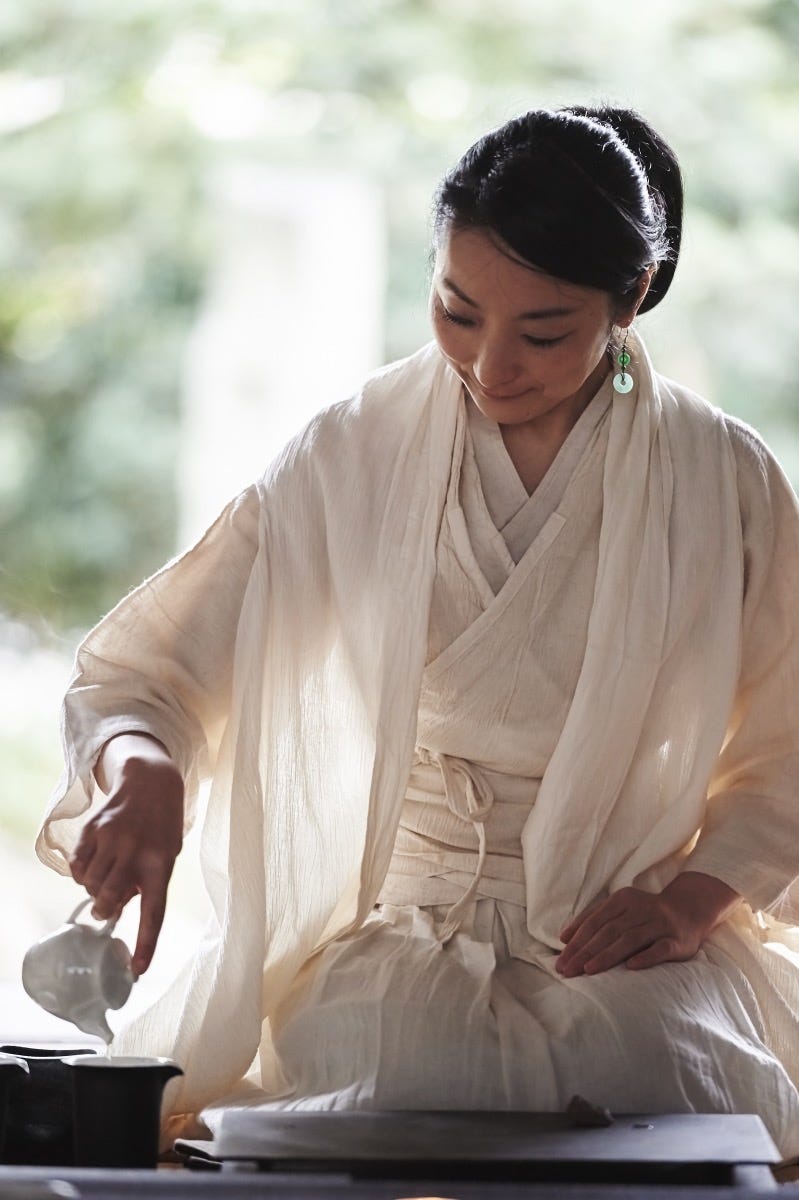
山是山水是水。茶是茶。Mountain is mountain, river is river. Tea is tea.
"What is the Way of Tea?" I believe the answer begins with accepting things just as they are. It is the Way of discovering and understanding oneself, just as one truly is.
Naoko Iwasaki: This is a very difficult question. But at the same time, I believe the answer is relatively simple. It’s a question many people ask, and a theme many people are drawn to.
Humans have a natural tendency to seek meaning in intangible things, like tea, for a sense of security. The phrase “the Way of Tea” suggests that tea is more than a plant — something invisible and holds a mysterious, soulful dimension that sets it apart.
Adding the word 道 (dō, the Way) to tea evokes a hidden path, known only to those who have mastered tea, making us believe that tea is uniquely special and different from everything else.
Now, tea also has a deep connection with Buddhism.
The mountain is the mountain, the river is the river (山是山水是水) is a Zen saying that reflects a Buddhist view: to see things just as they are. If we follow this teaching, then perhaps we should begin with: Tea is tea (茶是茶).
When we ask, “What is the Way of Tea?” I believe the answer begins with accepting things just as they are. In Japanese, the term jinen (自然) is made up of the words “ji” (self) and “nen” (as it is) pointing to a natural state of being as it is. It begins with recognizing the pure presence that’s free from added meanings or interpretations: being fully here, just as one is. Just as nature exists in its natural state, tea is simply tea.
In Japanese culture, the use of the word jibun (自分) to refer to oneself reflects a non-individualistic worldview, unlike the more direct first-person pronouns in other languages. This aligns with a core Japanese philosophy: “I am you, and you are me. You and I are one and the same” as expressed through the idea of unity between heaven and humanity (天人合一). It is also connected to Japan’s reverence for nature and the beliefs of Shinto, seeing humans as an inseparable part of the natural world.
道 (dō) — meaning “way” — is formed by adding the radicals for head (首) and movement (辶) to the character 自 (self), which means “nature” or “being as it is.” To be as you are, and to walk as you are, that is the Way. And tea exists on this path, helping us recognize our own presence and our own being. So, the Way of Tea is the way of discovering and knowing oneself, just as one truly is.
However, the Way doesn't necessarily have to be tea. It could just as well be flowers, or archery, or calligraphy as there are many paths through which one can come to know the presence of one’s self.
How has tea changed over the years?
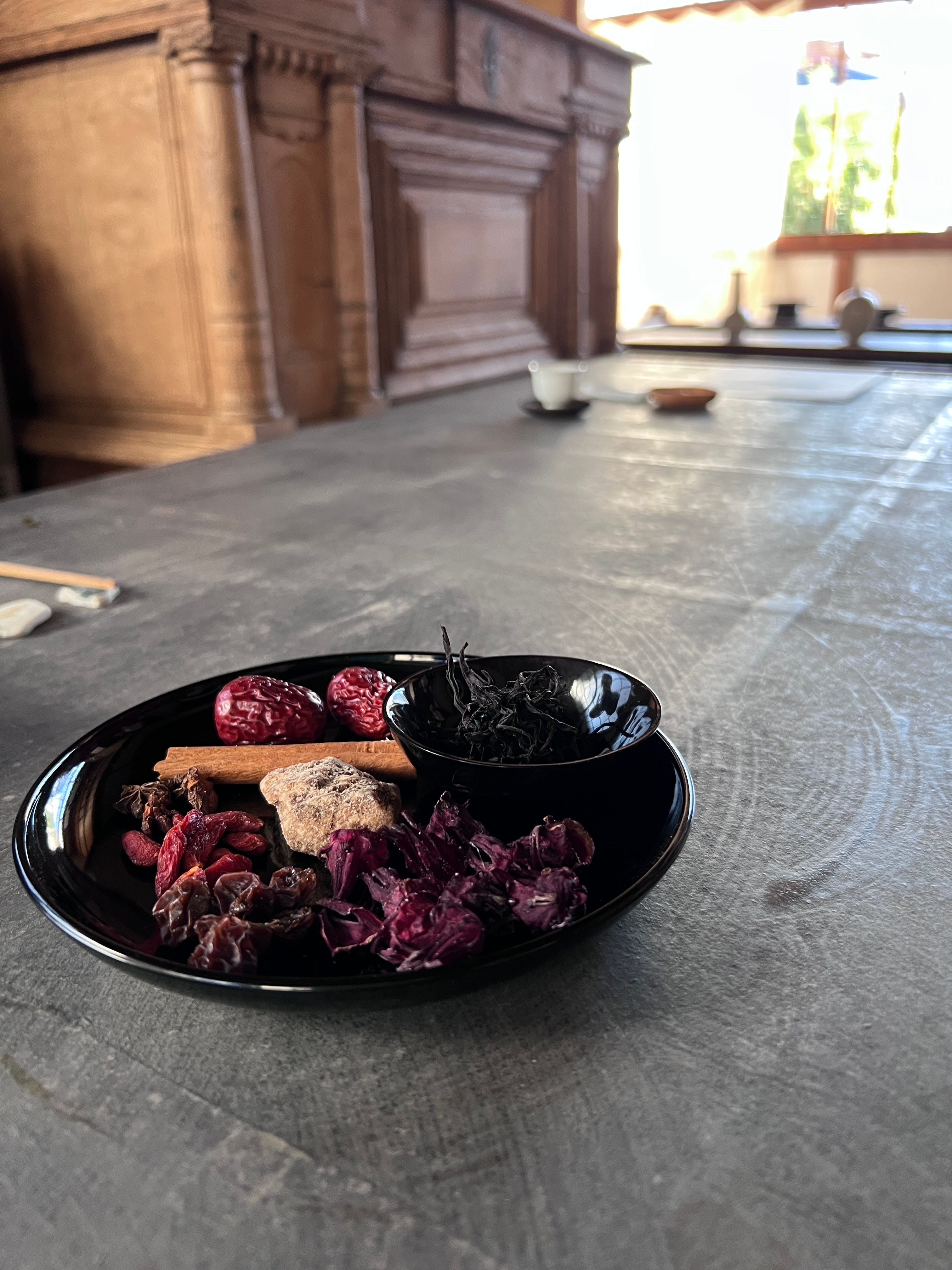
Tea has continuously evolved, woven into the philosophies and worldviews of each era.
In ancient China —
Tea began as a medicinal herb, a healing plant. In ancient thought, medicine and food came from the same source (薬食同源), meaning that everything we eat affects our body's internal organs. Tea was valued for its detoxifying effects, its ability to cool the body from internal heat, and sometimes even to relieve pain.
In Taoism, tea aligned with the quest for immortality.
In Buddhism, tea served as a sacred elixir to elevate one’s spiritual state, used for monastic practices and even replaced alcohol as the drink of choice in the gatherings of elite social circles.
Among common people, it featured in gambling games.
Eventually, tea became central to ritual offerings in Buddhism, evolving into a disciplined practice that laid the foundation for the Way of Tea (茶道).
For the literati, tea became a vital companion in deepening their engagement with poetry, zither music, calligraphy, and philosophical discourse. For them, tea was a catalyst that deepened artistic sensitivity and refined the spirit.
In Japan — during times of war, tea was treasured as a drink that calmed the mind, offering a rare moment of peace amid chaos. Even on the battlefield, it offered a sense of serenity.
In this way, tea evolved into a distinct culture in its own right as it became deeply embedded across various traditions.
Tea mirrors a human life marked by an eventful and dramatic journey. Just as each person holds many selves —bold and shy, innocent and lazy, overly serious and carefree — tea, too, shows many facets throughout its history.
And yet, when we take a step back and see the bigger picture, one thing remains constant: Tea has never rejected anyone as it has always stayed close to the human heart. It’s as if the tea leaves hold a quiet wisdom, to say: “Every version of you is still you — and each one is welcome.”
What are the differences between Taiwanese, Chinese, and Japanese tea?
Nature is always changing, and so is the human heart. In the world of Taiwanese and Chinese tea, the distance between nature and people is remarkably close. Tea is savored not just for its taste, but as a holistic appreciation of the environment in which tea grows, its origins: the tea seeds, the soil, the season of harvest.
In Taiwan and China, tea is approached with a deep sense of harmony with nature through the lens of seasonal and environmental change. When the heavens and earth shift, the tea changes too.
"What is not the usual tea, is still tea. What is not the usual path, is still the Way" reflects a worldview rooted in Taoist philosophy, which sees all things as living within constant transformation.
Japanese tea, widely respected today, draws much of its richness from ancient Chinese roots. Tea was introduced to Japan alongside Buddhism, and it incorporates the ritual etiquette found in Buddhist practice. Tea became part of the refined social culture of the upper classes, eventually elevated into a cultural and artistic pursuit.
Japanese tea etiquette and rituals are rooted in Baizhang’s Monastic Rules (百丈清規, Hyakujō Shingi). These rules, created by a Tang Dynasty Monk, are important to the Ch’an School of Buddhism, later known as Zen in Japan. They guide behavior and help regulate the mind, reflecting the principle that the ordinary is the Way (平常是道).
In Japan, the discipline of tea is a path to self mastery — bringing stillness to what moves, order to what fluctuates.
In this way, I feel the approach to tea differs between cultures, each with its own spirit.
What are Yin-Yang and the Five Elements? How do you see them present in tea practice?
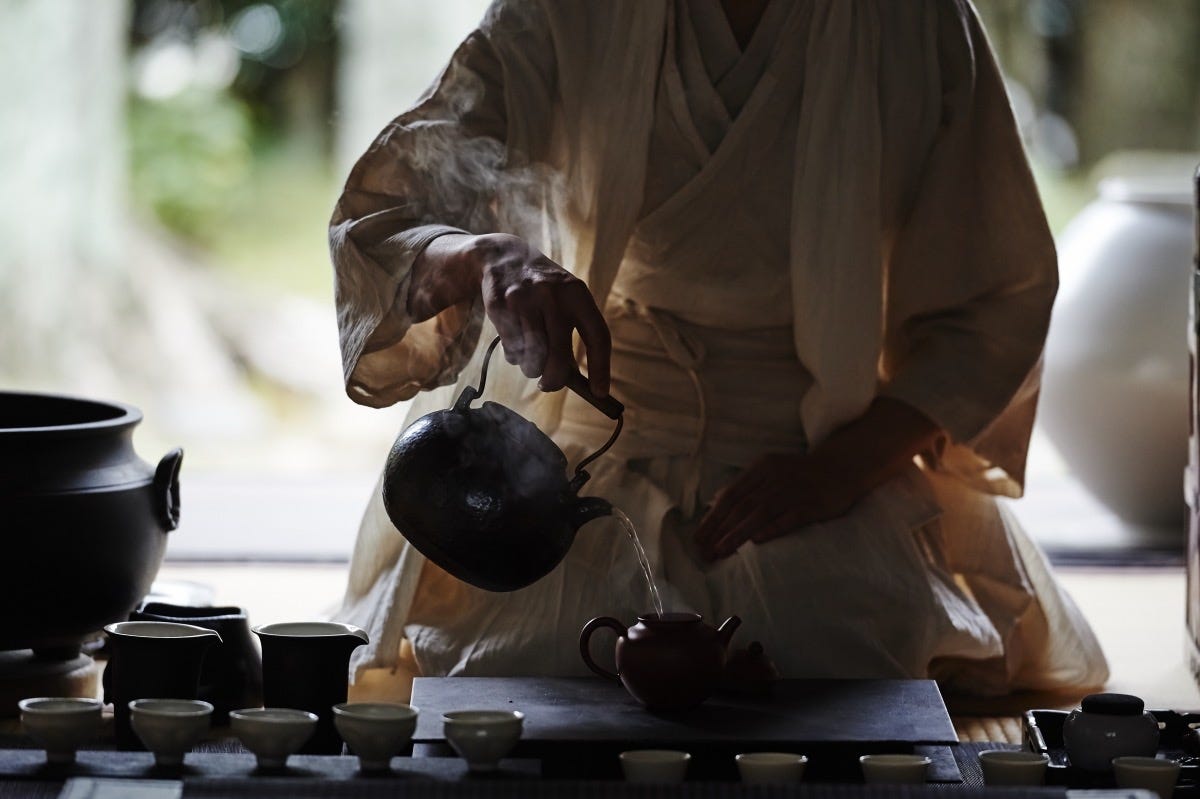
Yin-Yang and the Five Elements represent the natural order of the universe, a philosophy born from ancient people's careful observation of nature’s constant change, while living in harmony with it and being supported by it. They offer a framework for understanding the laws of nature and guide us on how to live in balance within that ever-changing world.
The season in which tea is picked, whether in spring or in winter, affects the energy it carries since tea is a part of nature. By understanding this, we can select teas that support our balance in tune with nature’s rhythm — choosing cooling (寒) teas in summer and warming (温) teas in winter. Similarly, one might choose a cooling tea in the morning and a warming tea in the evening.
As nature is always in motion, we too are living within a constantly shifting balance. Yin-Yang and the Five Elements offer a profound philosophy for learning how to live in tune with these natural laws. In ancient times, people lived with this awareness as part of their daily life. This was not just knowledge. It was wisdom, and it was considered the true way of human life.
In today’s world, where many of us live disconnected from nature, this way of thinking may feel foreign or difficult to grasp. But for me, sharing this worldview is a way to help people reconnect with their true selves — to remember who they are, and return to a more balanced, natural way of being.
PERSONAL JOURNEY WITH TEA
What inspired your journey into tea?
My journey with tea began 35 years ago in high school, when I joined the Japanese tea ceremony club. It was one of the extracurricular activities available, and I chose it somewhat casually at the time.
Five years later during university, I worked as a TV reporter to share my experience with Dong Ding Oolong Tea (冻顶乌龙茶) in Taiwan. That experience marked the true beginning of my journey with tea.
Back then, Taiwan was not as popular as it is today, and in Japan, oolong tea was mostly associated with bottled drinks sold by large companies. I was struck by how different Taiwanese tea was. Its rich aroma and refined taste were unlike anything I had experienced with Japanese tea.
What also left a deep impression on me was how sincerely the people of Taiwan enjoyed tea itself. Even though Japanese tea originally came from China, I began to wonder: Why had the ways of enjoying tea - the social gestures and approaches - become so different across cultures?
That question sparked my ongoing exploration into the world of tea.
How has practicing tea changed you and your life?
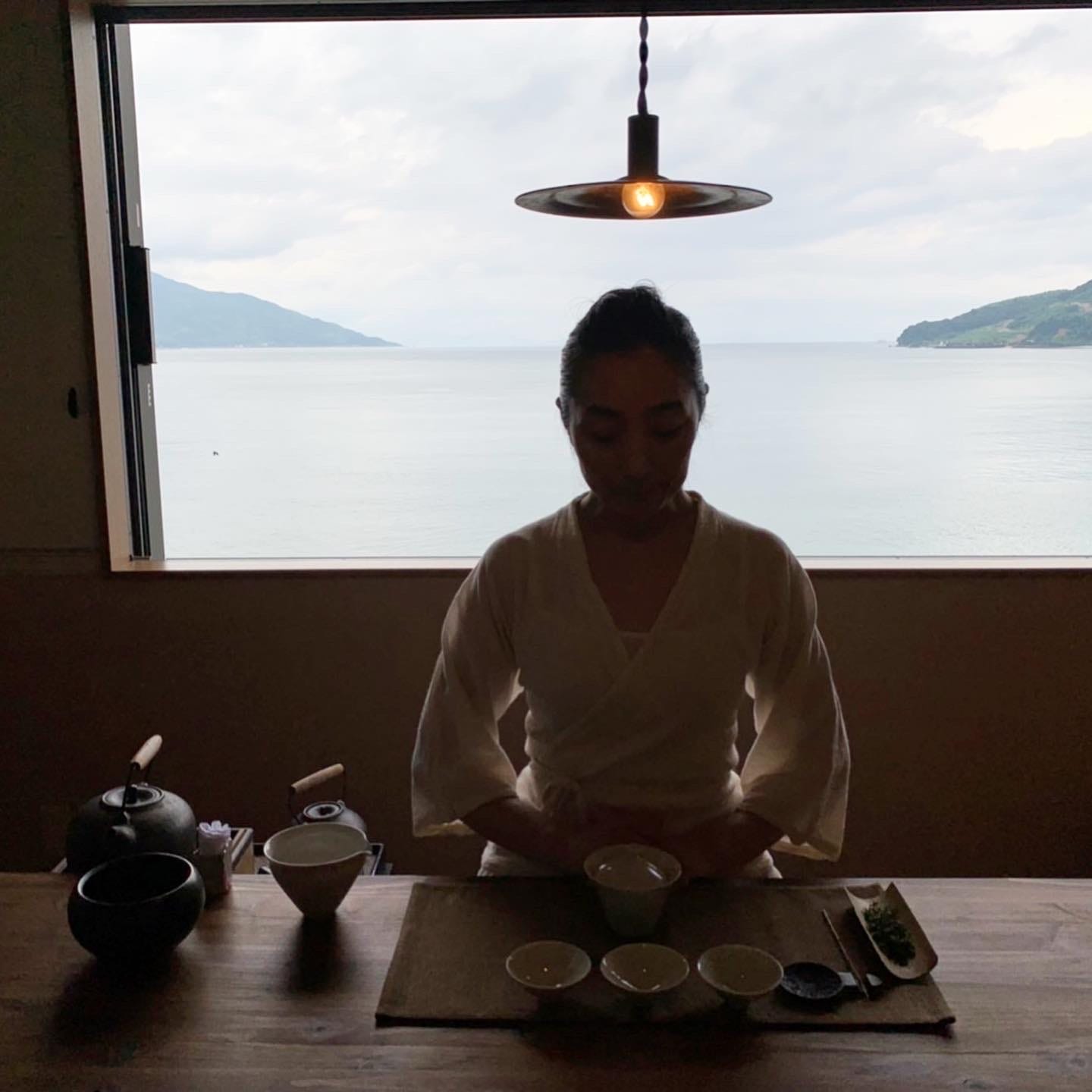
“The Way that can be spoken of is not the constant Way (道可道、非常道)” is a famous saying by Laozi, the ancient Chinese philosopher and founder of Taoism, who taught the wisdom of living simply and in harmony with the natural Way.
Similarly, the tea that can be defined is not true tea 茶可茶、非常茶.
Tea is tea, and at the same time, tea is not tea. I believe this is where the depth of tea truly lies.For a long time, I wanted to become “someone.” I wanted to be better, to be more. And whenever I looked at the outside world, I felt frustrated with my own inadequacies. I wanted to become my ideal self. But what is this “ideal self”?
I once imagined an ideal life as someone who could think sharply, lead projects, grow income, travel freely around the world, acquire anything she wanted, expand her network of friends and connections, enjoy fine food, have plenty of leisure time. Or perhaps someone who would meet the perfect man, be loved, get married, have children - a life where I could be a mother and a wife, live off my husband’s income, enjoy hobbies to refine myself, and raise my children to be respectable adults.
For others, the ideal might be to build a successful career and achieve social recognition. When we see our friends or acquaintances living such lives, looking happy, we can’t help but feel envy, thinking, I want that too.
But when we turn our eyes to nature, we see something extraordinary: Nature is always perfect. No matter the season or circumstance, nature simply is — complete in itself. And if nature is perfect, then you, as a part of nature, are already perfect too.
A single cup of tea brought me back to my center. Tea allowed me to accept myself, just as I am.
CHAZEN SŌDŌ 茶禅草堂
What is Chazen Sōdō's philosophy on the harmony between nature and humans?
I have been walking the path of tea for many years now, and a particular feeling has stayed with me: with all my being, we are a part of nature.
When I am enveloped in the taste and aroma of tea, my thoughts naturally begin to dissolve, and I feel my body begin to relax. It often feels as if I’m standing at the very heart of nature — sometimes in a forest, beside a flowing river, as I hear the faintest birdsong, or when bathed in the warmth and energy of the sun.
It reminds me that we are not merely a part of nature — we are nature itself. When we recognize this, we begin to return to our most authentic selves.
Five years ago, I moved my base to Yamaguchi Prefecture from the vast metropolis of Tokyo. Even in the city, tea and nature grounded me. But after moving into the great outdoors, my connection of being one with nature deepened even more directly — both physically, emotionally, and spiritually.
Chazen Sōdō has always been rooted in the philosophy of harmony between people and nature as a guiding theme since I started my tea classroom in Tokyo.
Heaven and humanity as one 天人合一 is a teaching that speaks deeply to me. I believe that when we truly recognize that we are part of nature, or rather, that we are nature itself, we are finally free to be true to ourselves, as we are.
We often desire to be someone else — to succeed, to become more, to mirror those we admire. But perhaps those desires arise from a sense of emptiness or lack within.
Pause for a moment and look back. You’ve come so far. You’ve done more than enough. Now, give yourself the permission to simply be because the path you seek has always been beneath your feet all along.
Nature offers us unconditional, infinite love, without exception. And I believe tea is a drink that connects us to that natural essence. It brings us back to our center. It reminds us of our true, unshakable being.
This is the philosophy behind Chazen Sōdō.
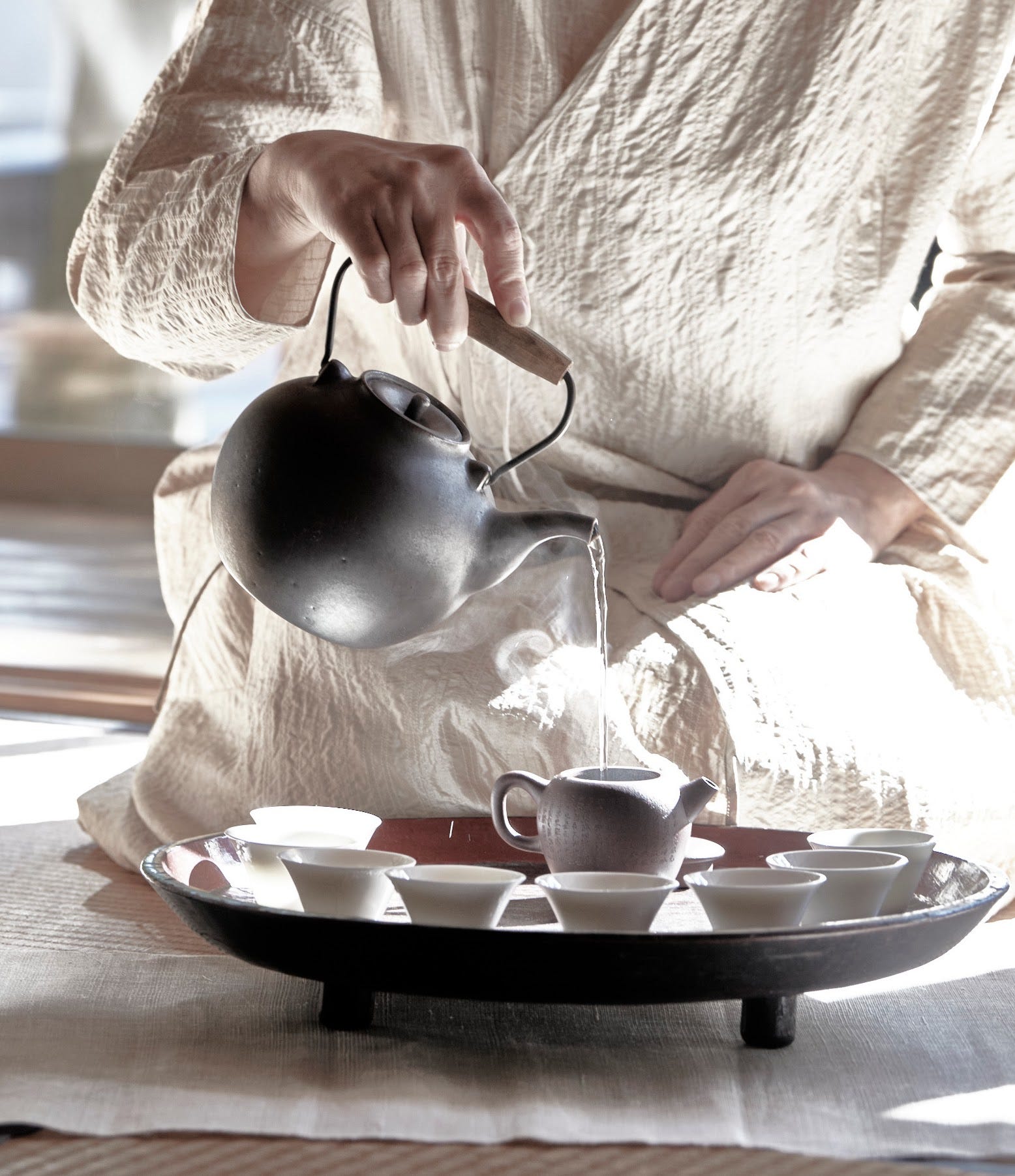
With Chazen Sōdō’s tea classrooms across multiple sites, how do you manage your time?
I am based in Yamaguchi Prefecture, where I live and spend most of my time. I travel regularly to Kyoto - usually staying for a week to ten days each month - to teach at my classroom there.
The Tokyo classroom is run by a trusted long-time student, so my travel is mostly between Yamaguchi and Kyoto. I usually conduct online classes from Yamaguchi, though I occasionally stream from Kyoto as well.
The tea industry is changing and also competitive. How do you see Chazen Sōdō's role going forward?
Over the past 25 years, the tea market has changed dramatically.
In the field of Chinese tea, especially, when I first began my journey, very few people truly understood Chinese tea culture. Now, more and more people are developing a positive impression of both Chinese and Taiwanese tea. This shift is something I had long hoped for.
Back when the Chinese tea industry and its culture were still in their early stages of development, Japanese tea culture, especially the Way of Tea (Sadō), had already reached a highly refined and established form. That is something the Japanese people can and should be proud of.
My current philosophy is that all tea is ultimately one and the same. So perhaps, there’s no longer a need to distinguish between Japanese tea and Chinese tea. I believe that the future of tea culture will follow a more universal path.
As for the path forward for Chazen Sōdō (茶禅草堂), I believe we are standing at a major turning point to more fully realize the vision held since the beginning: A world in which people live in harmony with nature, through the experience of a single cup of tea.
Our work is about guiding people to reconnect with themselves, to understand who they truly are at their core. Tea has the power to harmonize and balance, but to feel its subtle power, we must first nurture our own sensitivity — a practice that takes time and care.
Suō-Ōshima Island, where we are now based, is a place rich in natural beauty. Going forward, I believe our work will center around healing and retreat sessions, combining tea and traditional herbal medicine (yakuzen 薬膳), helping people restore balance in both body and mind.
KYOTO
What attracted you to Kyoto?
In many ways, Kyoto is the cultural heart of Japan. Geographically, it is located near the center of the country; symbolically, many of Japan’s iconic cultural traditions are concentrated in this city. For visitors from abroad who wish to understand Japan, Kyoto is undoubtedly one of the best places to experience its essence.
In Kyoto, history and modern life are beautifully interwoven — one might even say it feels like living inside a timeless historical picture scroll.
The reason I began working here is that one of my students, who had started living in Kyoto, strongly encouraged me to do so. For someone like me, who is deeply involved in tea culture, the city’s deeply rooted tea culture woven into everyday life is especially attractive.
While many people are engaged in the practice of Japanese tea ceremony, my specialty is in Chinese tea culture. So I carry out my work with a deep awareness of the meaning and value of introducing Chinese tea traditions in a city where Japanese tea culture has long been established.
How has Kyoto managed to both receive and preserve foreign cultures?
Historically, Japan experienced three major waves of tea culture introduced from China - during the Tang, Song, and Ming Dynasties.
What began as an adoption of Chinese-style practices during the Tang dynasty gradually evolved into something uniquely Japanese, infused with its own sensibilities and philosophy — and this eventually formed the basis of the Japanese way of tea we know today.
Even now, one can find traces of Chinese cultural influence throughout Kyoto.
I believe the Japanese people have an exceptional ability to embrace outside influences and seamlessly blend them with their original essence. Through their unique aesthetic sense, they cherish these combined elements and pass them down through generations — creating what we now recognize as Japanese traditional culture: a refined synthesis of thoughtfully received and skillfully adapted foreign elements, handled with care.
These influences are not limited to China; they also include cultural elements from Europe and the Middle East. Perhaps this is why so many people from around the world are drawn to Kyoto.
Even if it’s their first time in Japan, foreigners often feel a deep resonance in their soul 魂 tamashii - with a kind of nostalgic familiarity. Kyoto retains the spirit of a culture that has long welcomed the world, and that, I believe, is one of its most profound attractions.
Tea is beautiful. What is beauty to you?
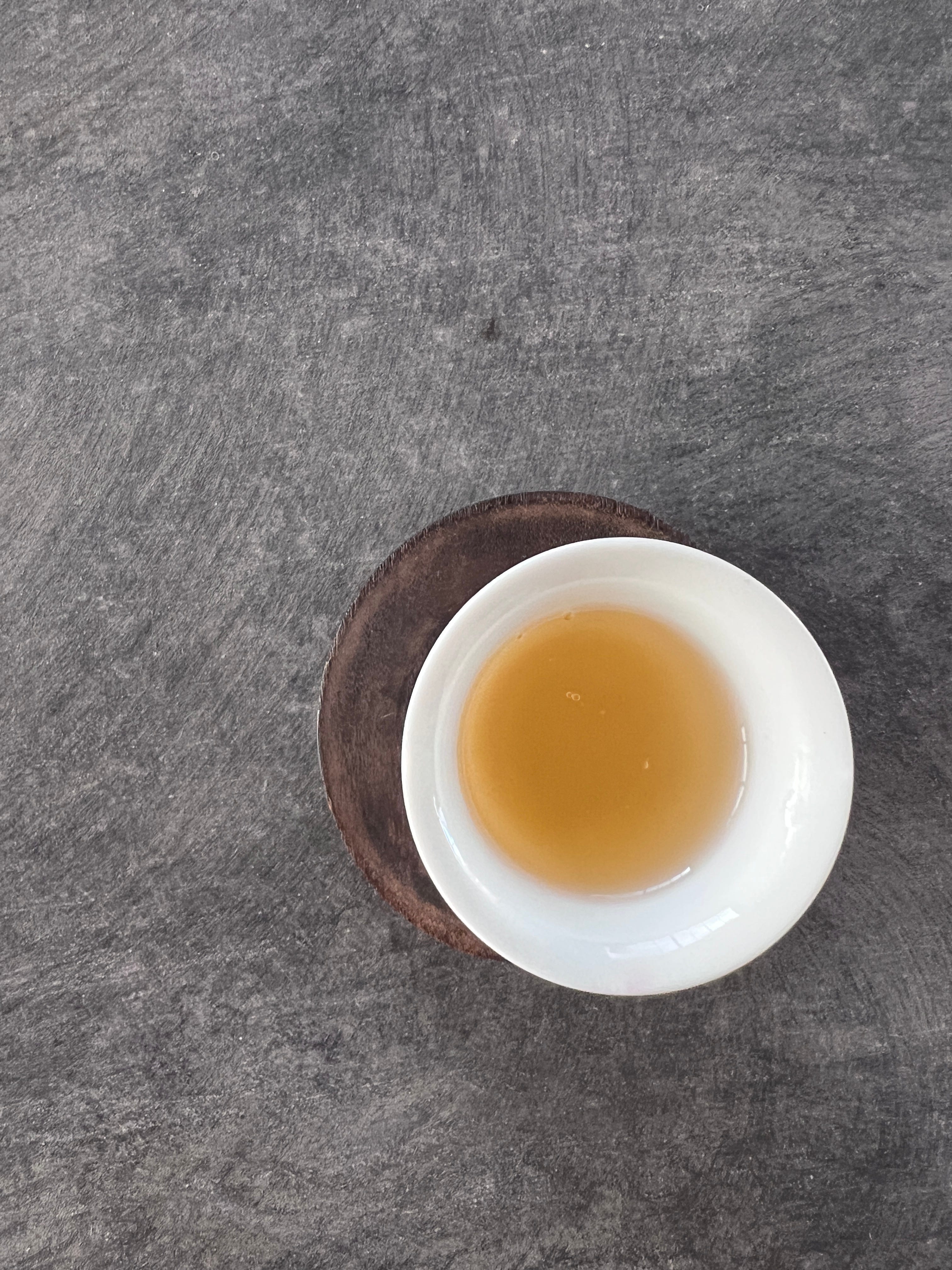
Do you think that tea is beautiful? If you do, it’s likely because you have the ability to discover the beauty that already exists within your heart.
I don’t believe that everything in the world of tea is beautiful. In fact, I see tea as a mirror of human nature itself.
Through tea, people have sought immortality. There are also those who became consumed by it. Some turned to tea for solace, seeking to deepen their spirituality or to discipline themselves.
But at the same time, tea has been used as a tool in political and economic negotiations between nations, and in some cases, even sparked wars.
Yet, tea never speaks. It accepts all aspects of human nature without judgment or distinction. Perhaps that is why some still say, “Tea is beautiful.” But why is that?
This world is built upon the balance of yin and yang. When we look at things relatively, we recognize beauty only because there is also ugliness. If we were constantly surrounded by only beautiful things, we wouldn’t be able to identify them as “beautiful.”
If there is beauty in tea, perhaps it is because tea also contains its own shadows.
Maybe it is more accurate to say: “We are capable of discovering beauty within tea.”
The world around us is full of beauty. Yet, within the structures of society in our day-to-day lives, we inevitably encounter distortion, greed, ego, and injustice. Sometimes, I too get pulled in these whirlwind, clinging to things I wish I didn’t. A quiet frustration rises and so, I turn to a cup of tea.
When tea clears the murkiness within me, I see how it reveals the beauty already in my heart — a powerful moment when the beauty within me resonates with the beauty in a cup of tea.
This becomes a return to my true self as my heart grows calmer, gentler, radiating with compassion and love.
As Okakura Tenshin once said:“Beauty lies in the heart of the beholder.” I’d like to leave you with this final thought.
For more information
Naoko Iwasaki - Instagram
Chazen Sōdō - Instagram
Conversation #2 with Naoko Iwasaki on Obaku Zen — Literati Tea Culture | Zen in Japan, from China
I love these tea-teriews (tea interviews) Peck Gee, and this one is exceptionally beautiful. I want to quote so many of the reflective words here. Firstly, "Mountain is mountain, river is river. Tea is tea." reminds me of Gertrude Stein's "a rose is a rose is a rose" - first appearing in a line of poetry, repeated by the author till finally she wrote "Civilization begins with a rose.". Much like tea.
Then there is "What is the Way of Tea?” I believe the answer begins with accepting things just as they are, being fully here, just as one is" and
"If there is beauty in tea, perhaps it is because tea also contains its own shadows."
But there are too many insightful phrases to repost. I'll have to read and reread, over a cup of simple tea.
thank you again for your dedication to the Way of Tea. 🙏
The closest I feel like being one with nature is when I hike small paths through the mountain. Great text. Lovely